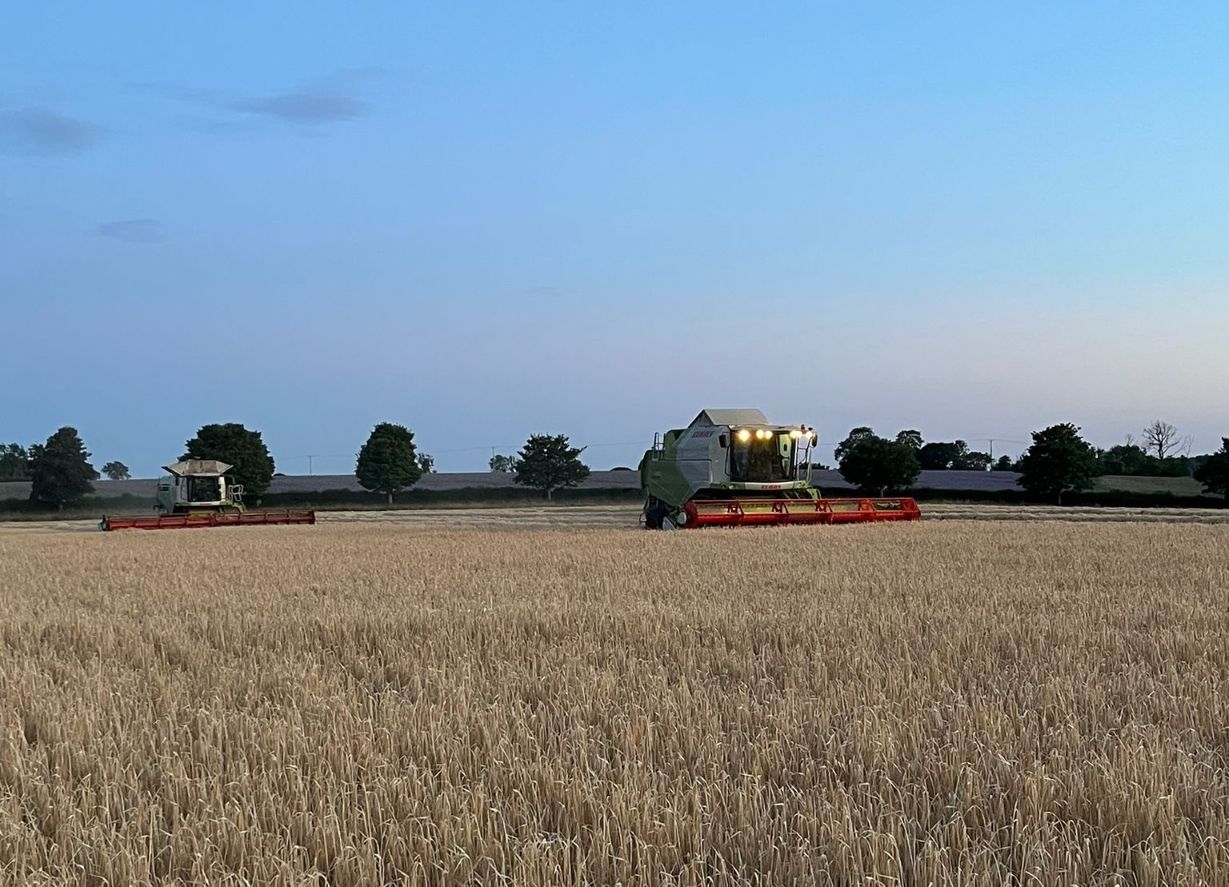
This month’s news from the Estate comes from Estate owner Nicholas Wills.
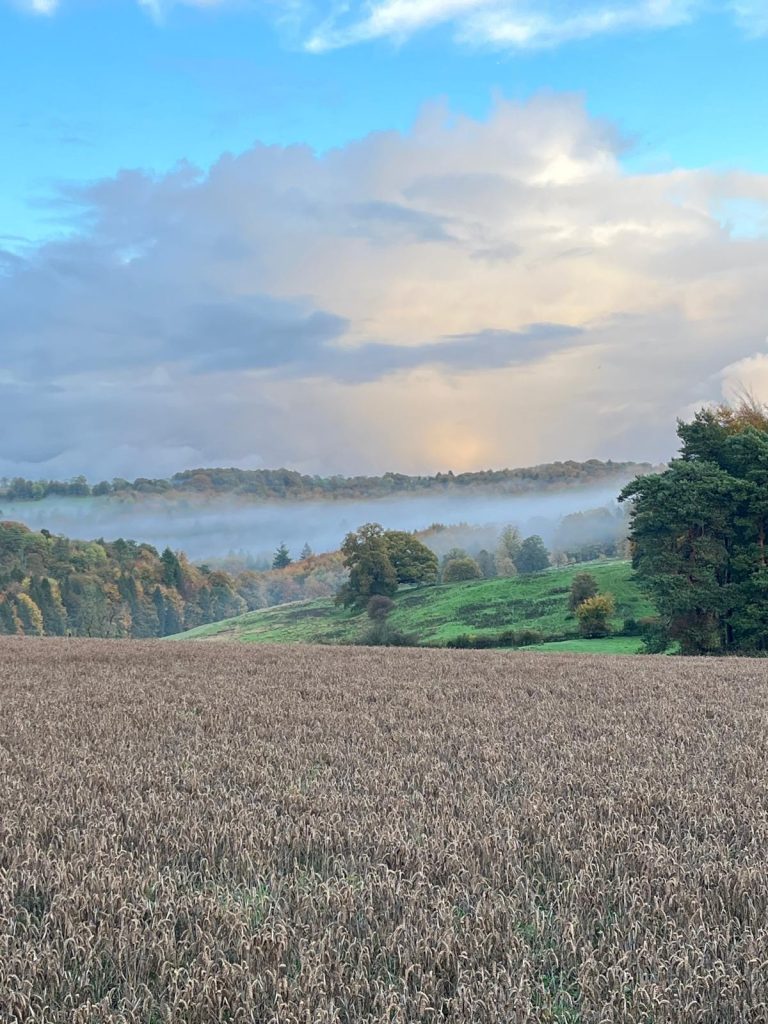
A farming system in flux
It feels as though farming has been in a state of flux since 2016, when the vote to leave the EU set in motion the end of the Common Agricultural Policy and the subsidies that came with it. I think most farmers support the idea of farming in step with environmental custodianship, but the lack of consistent policy and financial support has made it challenging. This was summed up on 22 September, when the second application window for the Sustainable Farming Incentive (SFI26) opened at 10am and closed in under 6 hours with its £253 million budget fully allocated. The appetite for environmental custodianship is there, from farmers and government alike; what’s missing is a funding mechanism to match it. And the stakes are high: farmland covers 69% of the UK [1], and farmland bird numbers have fallen by 63% since 1970 [2]. If we can get it right, the Cotswolds is well placed to show that farming and nature can thrive hand in hand.
Five principles
At Miserden we began farming regeneratively in 2019. That means following five broad principles:
- Minimise soil disturbance: avoid heavy ploughing, deep cultivation and excessive chemical inputs, to protect soil structure, reduce carbon loss and preserve the life in the soil. This matters: the Environment Agency estimates that intensive farming has cost England’s arable soils 40–60% of their organic carbon [3].
- Keep the soil covered: use living plants, crop residues or stubble to shield the soil from wind, heavy rain and extreme swings in temperature.
- Maintain living roots in the soil: keep plants or cover crops growing year-round, so the sugars their roots release can continuously feed soil microbes and the fungi that partner with plant roots (mycorrhizal fungi). A cereal crop sends roughly a fifth of the carbon it captures below ground; grasses send a third or more [4].
- Maximise plant diversity: grow a varied mix of crops, companion plants or multi-species cover crops instead of a single crop, to mimic natural ecosystems.
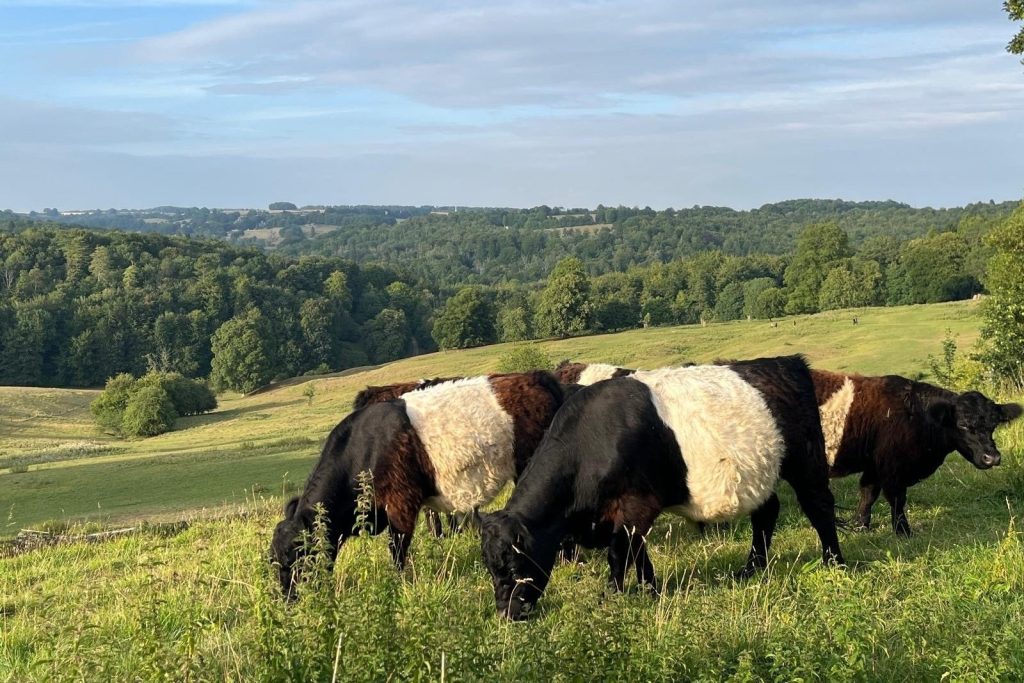
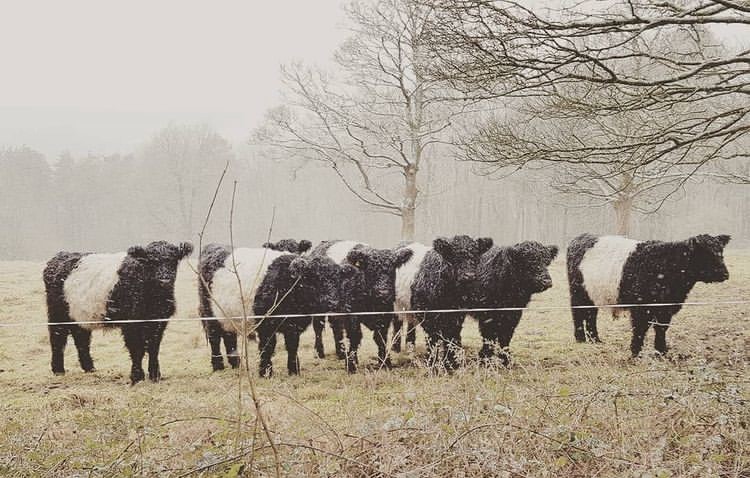
- Integrate livestock: bring grazing animals back onto arable land to recycle nutrients, build soil organic matter and improve biodiversity.
Good old-fashioned mixed farming – with one Achilles’ heel
Ultimately, ‘regenerative’ is a fancy way of saying good old-fashioned mixed farming. There is, however, one potential Achilles’ heel: the use of glyphosate, a broad-spectrum weedkiller, instead of the plough to prepare the ground for the next crop. Ploughing burns more diesel and turning the soil over also exposes carbon locked in the ground, which combines with oxygen and escapes to the atmosphere as CO₂, and it breaks down the soil’s natural structure.
Instead, we sow cover crops with deep tap-roots, such as legumes and brassicas, to break up compacted ground (they double as winter grazing for our sheep). The cover crop is then sprayed off with glyphosate before the next crop is drilled. Use of Glyphosate divides opinion. There are arguments for and against but in my mind regenerative principles win through, especially on our thin, stony limestone-brash soils where building organic matter is so important.
More organic matter helps the soil hold water, carrying crops through dry spells and reducing run-off, erosion and flooding during heavy rain. The gains per field are modest with a 1% rise in soil carbon adding roughly 1.2 mm of available water for every 10 cm of soil [5], but across a landscape they add up. Soil degradation is estimated to cost England and Wales around £1.2 billion a year, nearly half of it from lost organic matter [6].
Sheep, Straw and Muck
Our arable rotation runs as follows:
- A three- to four-year ley of grass and legumes (clovers and similar plants that fix their own nitrogen from the air)
- Winter wheat
- Winter barley
- A second wheat crop
- Stubble turnips, grazed by the sheep over winter
- Spring barley
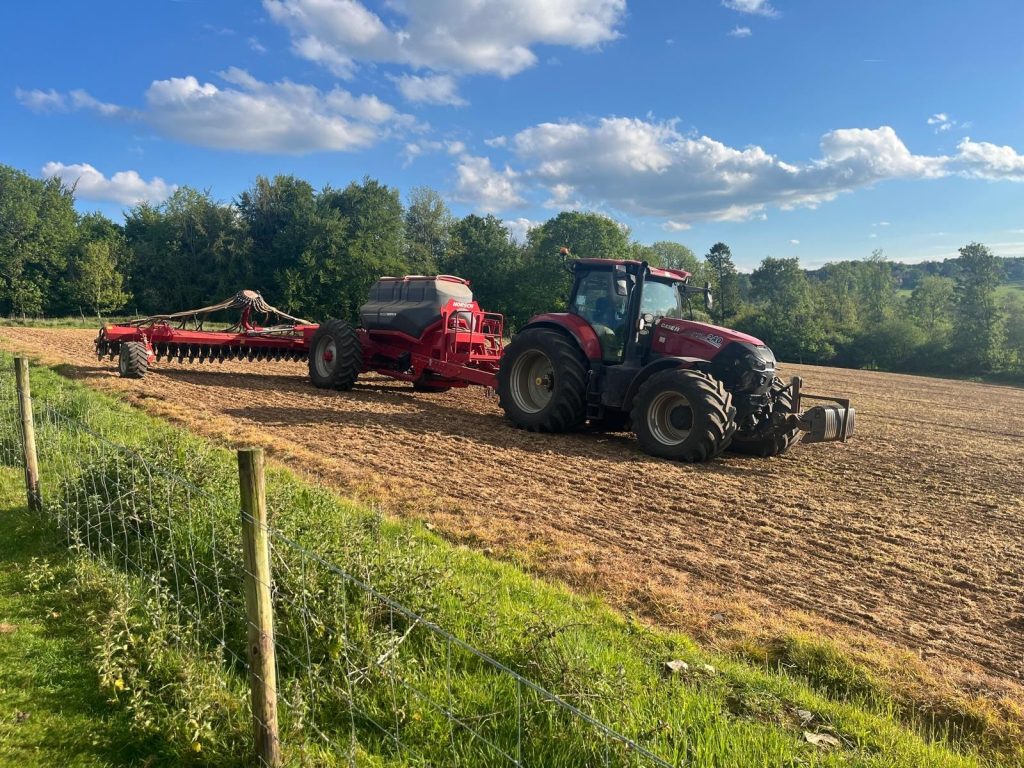
On the Cotswold escarpment, thinner soils generally reduce cereal yields by around 1.5 tonnes per hectare than deeper soils farmed the same way. For context, the UK average wheat yield in 2025 was 7.2 t/ha [7], so that is a gap of more than a quarter. It makes sense, then, to cut back on artificial inputs and rely on manure as much as possible. To build organic matter we run our own flock of 1,200 New Zealand Romney ewes, which graze the leys and forage crops. Before Christmas they also graze our winter cereals, mostly winter wheat. By then these crops have often grown a lot of leaf, which is prone to fungal disease. Grazing removes that diseased leaf and encourages each plant to send up more shoots (known as tillering), which thickens the crop. We also run what’s known as a ‘straw for muck’ arrangement with a local beef farmer: our straw is baled and used as bedding for their cattle, then comes back to us as manure to spread on our fields. Each tonne of cattle manure returns roughly 6 kg of nitrogen, 3 kg of phosphate and 9 kg of potash, plus around 250 kg of solids, much of it organic matter [8]. We aim to put back at least as many nutrients as we take off the farm.
Resilience, from soil to plate
There is a lot of talk about resilience: to climate change, in food supply chains and in national food security. But there is also the resilience of the population itself, through eating nutrient-rich food and reducing diet-related illness. A good place to start is Ravenous by Henry Dimbleby and Jemima Lewis, published in 2023 [9]. It is a readable version of the National Food Strategy, which Dimbleby led for the government, and the numbers in it are stark. Poor diet contributes to an estimated 64,000 deaths a year in England [10]; conditions linked to excess weight cost the NHS around £18 billion a year; and the UK food system produces around 20% of our greenhouse gas emissions [11]. The book argues for a model in which health, education and agriculture policy are joined up, so that each delivers better outcomes for the others. I think our regenerative farming model is a key foundation for delivering some of these aims.
References
- Defra, Agriculture in the UK 2025, Chapter 2
- Defra, Wild bird populations in the UK and England, 1970 to 2025
- Environment Agency, State of the environment: soil (2019)
- Pausch & Kuzyakov (2018), Carbon input by roots into the soil, Global Change Biology
- Minasny & McBratney (2018), Limited effect of organic matter on soil available water capacity, European Journal of Soil Science
- Graves et al. (2015), The total costs of soil degradation in England and Wales, Ecological Economics
- Defra, Agriculture in the UK 2025, Chapter 7
- AHDB, Using farmyard manure (RB209 typical values)
- Profile Books, Ravenous
- National Food Strategy launch summary, via Fuse
- National Food Strategy: The Plan (2021), pp. 20 and 25